|
The origins of the Day of the Dead celebrations in Mexico can be traced back to the indigenous peoples of the area, such as the Aztec, Maya, Purhépecha, Nahua, and Totonac. Rituals celebrating the lives of ancestors have been observed by these civilisations perhaps for as long as 3000 years. In the pre-Hispanic era, it was common to keep skulls as trophies and display them during the rituals to symbolise death and rebirth.
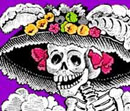 On the 2nd of November, toys are brought for dead children (or little angels), and bottles of tequila, mezcal, pulque or atole for adults. Families will also offer trinkets and decorations for the deceased's favorite things on the grave. These offerings are also put in homes, usually with foods such as caramelised pumpkin, pan de muerto ("bread of the dead") or sugar skulls and beverages such as atole. These offerings are left out in the homes as a welcoming gesture for the deceased.
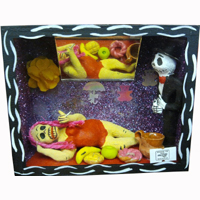
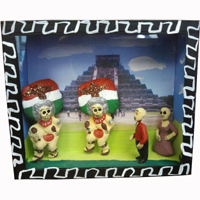
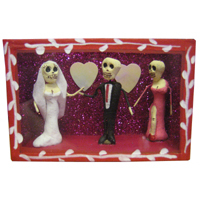
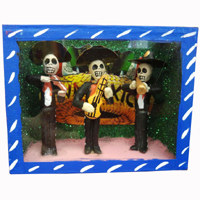
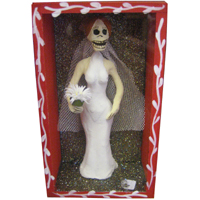
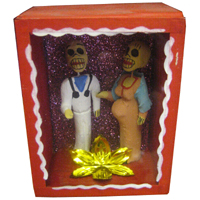
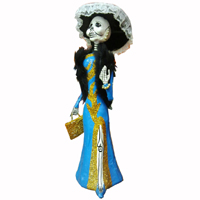
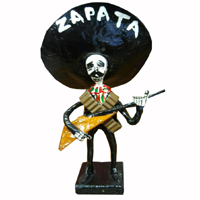
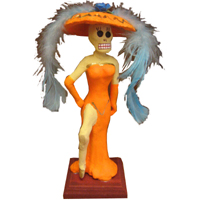
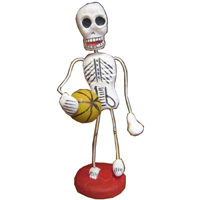
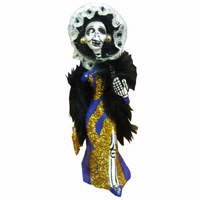
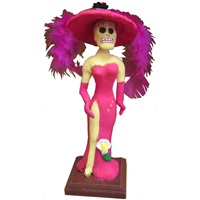
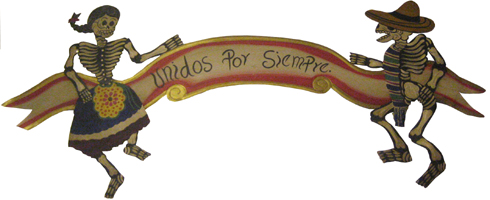
Our nichos and figurines depict deceased characters and professions and are totally hand-made by Mexican artisans. They are all unique and one-offs, made with a combination of wood, metal, glass, clay, glitter and paint. The images you see in this page are the actual pieces you will be getting from us. We have many, many more in our shop and cannot display all the artwork here as they come and go in a regular basis. If there is a particular character (ie Michael Jackson, Marilyn Monroe, etc) or profession (yes, even pole dancing) that you're after, just call us and we'll look around in our stock.
|